itinerary
Day 1: Cusco to Sacred Valley of the Incas
Today, we will start the day by enjoying the outdoors, staying active, meeting local people, and reconnecting with nature.
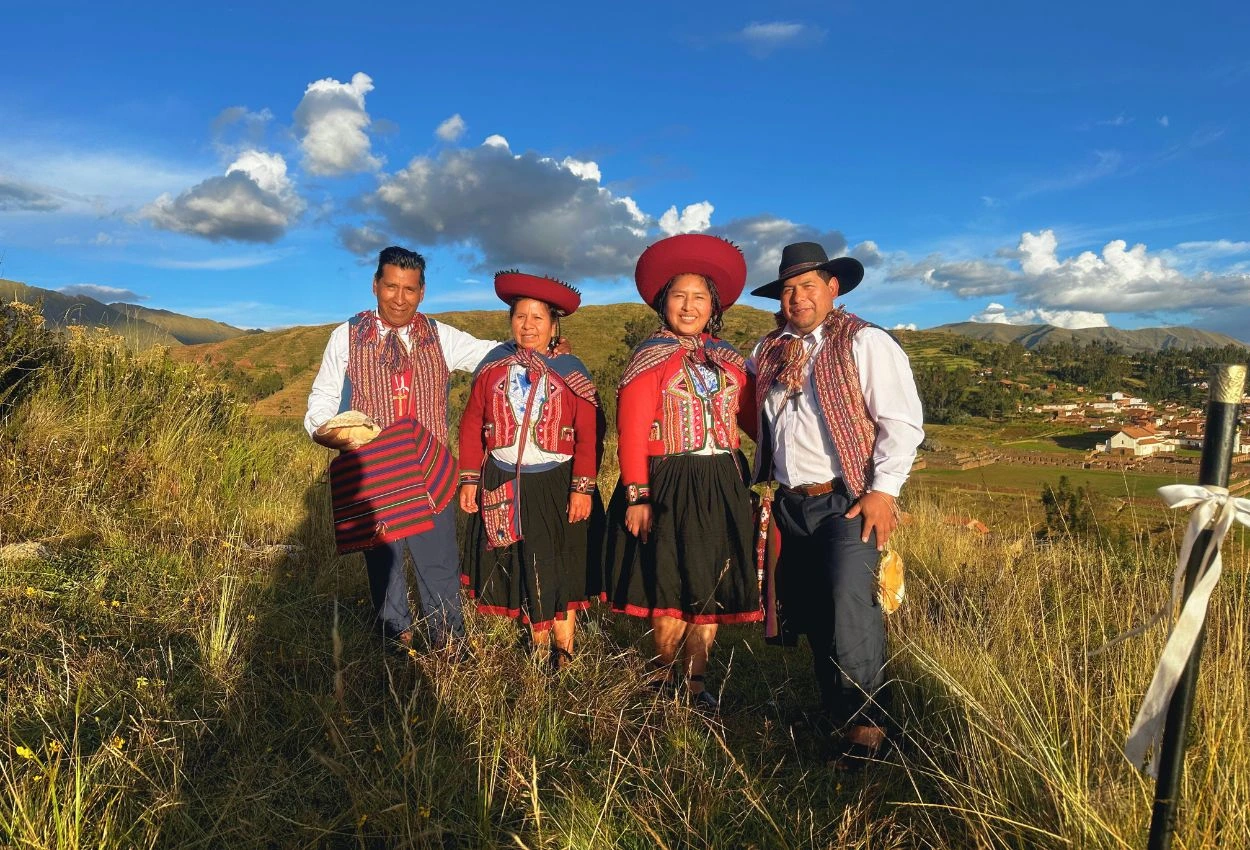
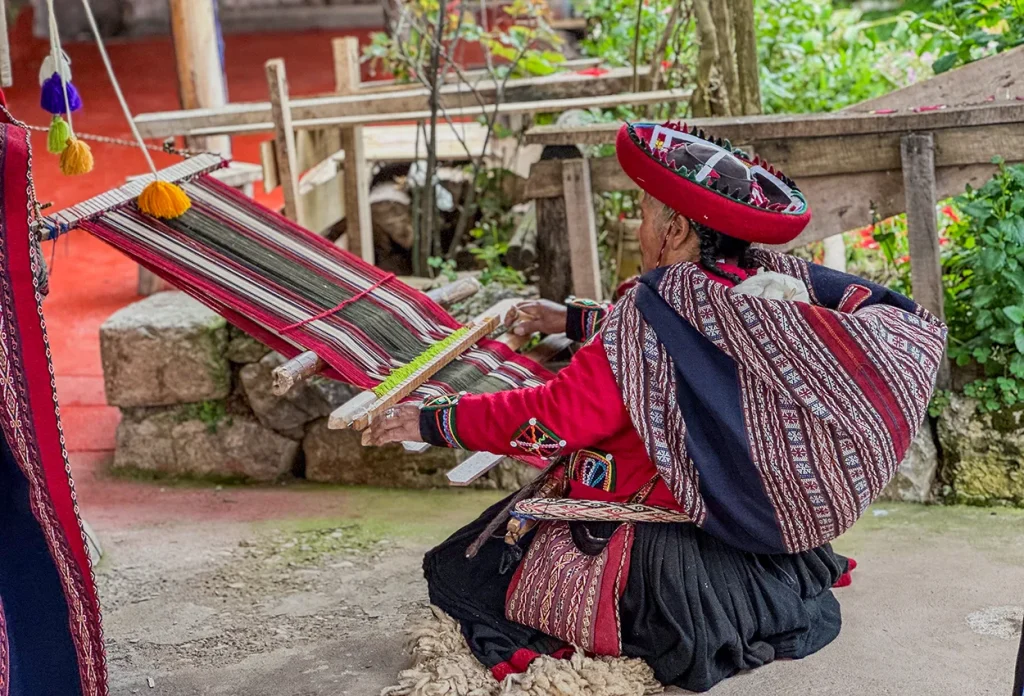
Our team will pick you up from your hotel at 8:00 a.m., and we will take short walks as we explore the most iconic sites in the Sacred Valley: the Maras Salt Mines and Moray. In the afternoon, we will visit Chinchero, where we will have lunch with the local community and a local family, interact with the residents, and learn about their ancestral traditions. If you enjoy working with your hands, you can take part in a workshop on the natural dyeing of sheep and alpaca wool, as well as pick up some souvenirs from your trip or gifts for your friends before returning to the hotel.
ON THIS TOUR, YOU WILL EXPLORE THE FOLLOWING HISTORICAL SITES
THE PICTURESQUE VILLAGE OF CHINCHERO
Visit extensive agricultural terraces that have remained unchanged, alongside the remains of ancient structures dating back to the Inca era all set within a landscape of remarkable natural beauty. You will also discover a charming 16th-century church in Chinchero; this small, intimate space is a jewel of colonial art, with walls and ceilings entirely adorned with paintings. Its grand wooden door features intricate carvings depicting various biblical scenes, while the altar stands out for its elaborate ornamentation and religious figures. In the village of Chinchero, the local people still wear their traditional attire a vibrant, living cultural heritage that becomes even more apparent and authentic during the Sunday market.
THE MARAS SALT MINES
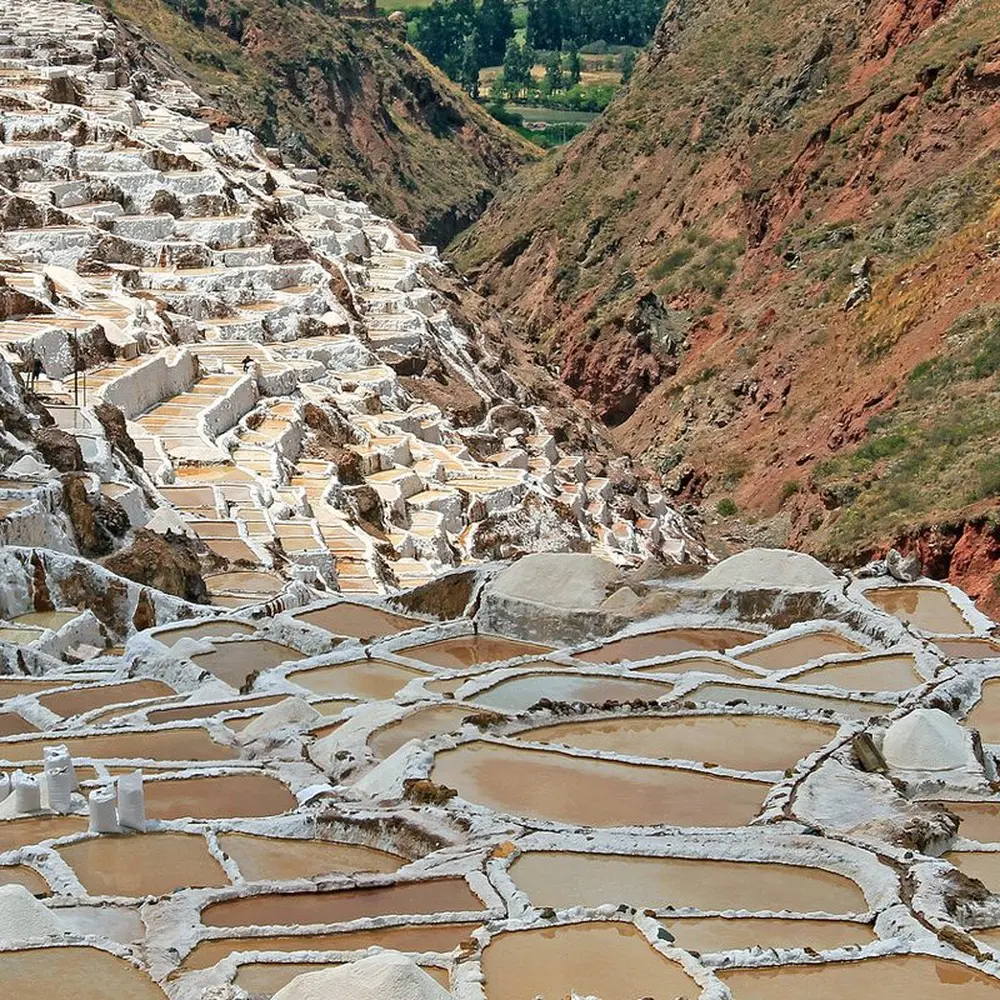
The Maras salt mines are a striking site located in a rugged valley. Since the time of the Incas, thousands of salt pools have been carved into the landscape the new ones added each year to extract a valuable resource: salt. The salt comes from a mineral-rich spring that emerges from higher ground nearby. A system of terraces is used to collect it; as the water evaporates, it leaves behind salt ready for harvesting. The landscape is breathtaking, with a vivid contrast of colors: the white of the salt, the greens and browns of the surrounding vegetation, and the terraces ranging in hue from ocher to brown all framed by the imposing, towering Andes mountains. To this day local residents continue to extract salt using traditional, artisanal methods, just as the Incas did centuries ago; you may very well have the opportunity to witness this process during your visit.
THE CIRCULAR TERRACES OF MORAY
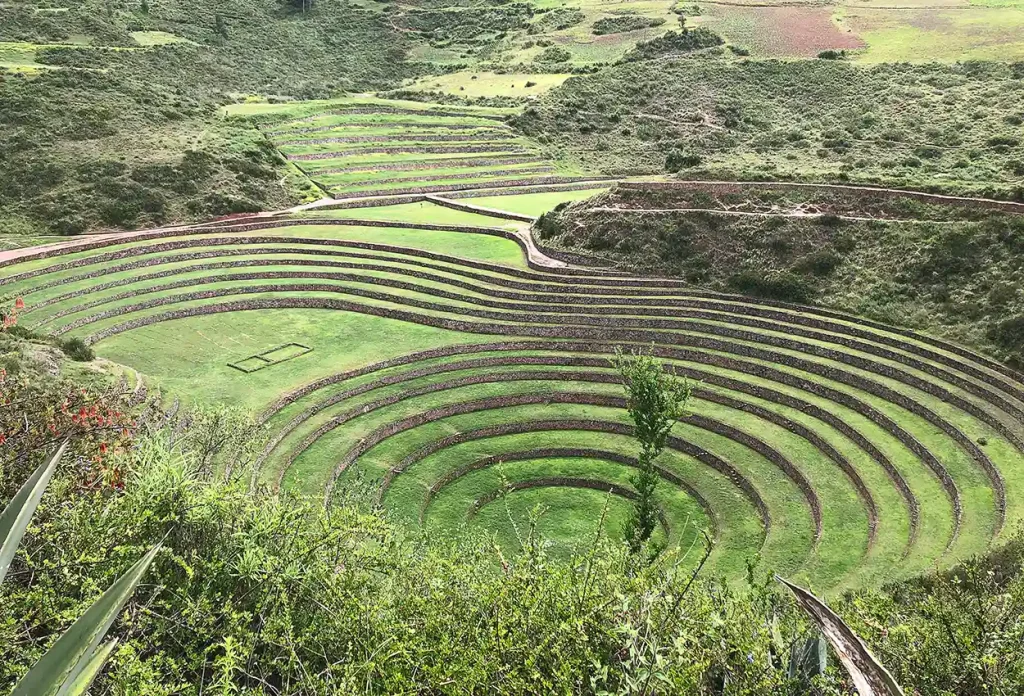
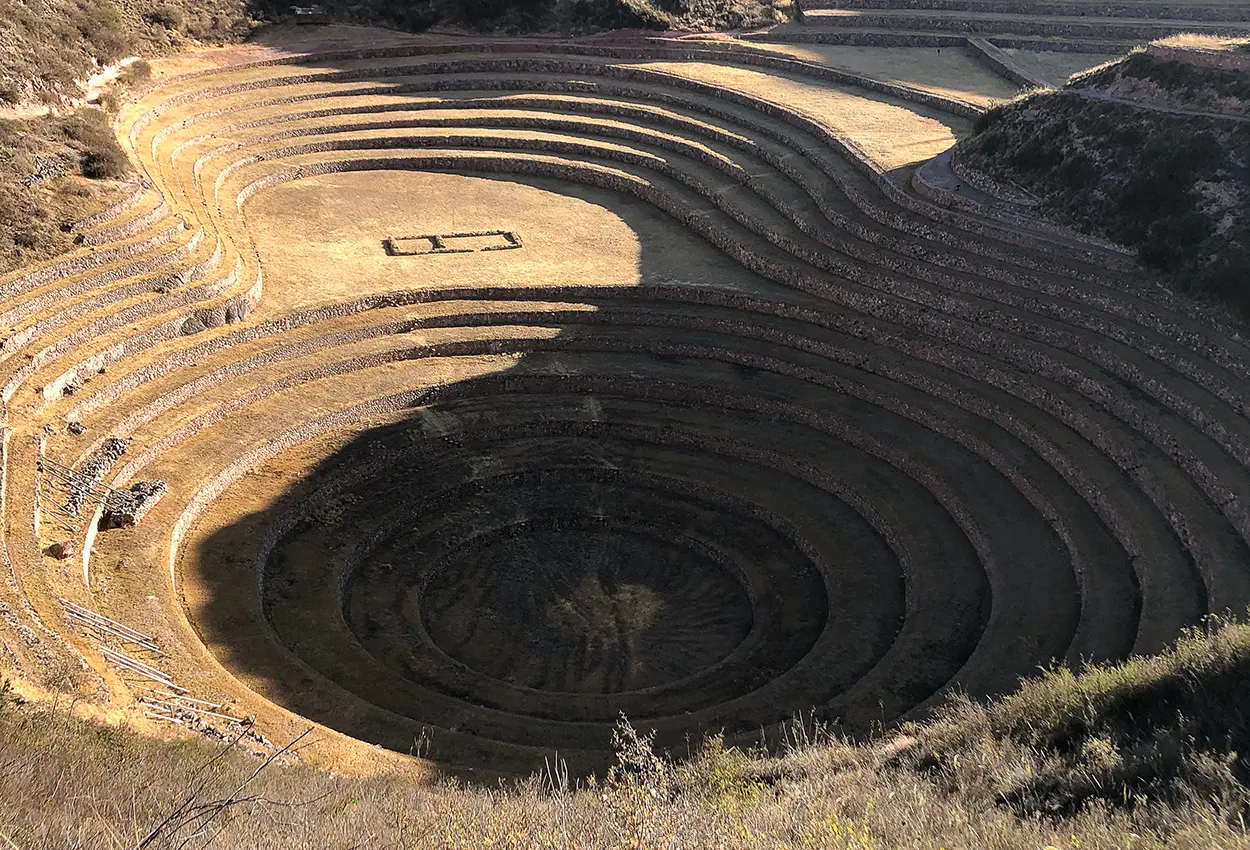
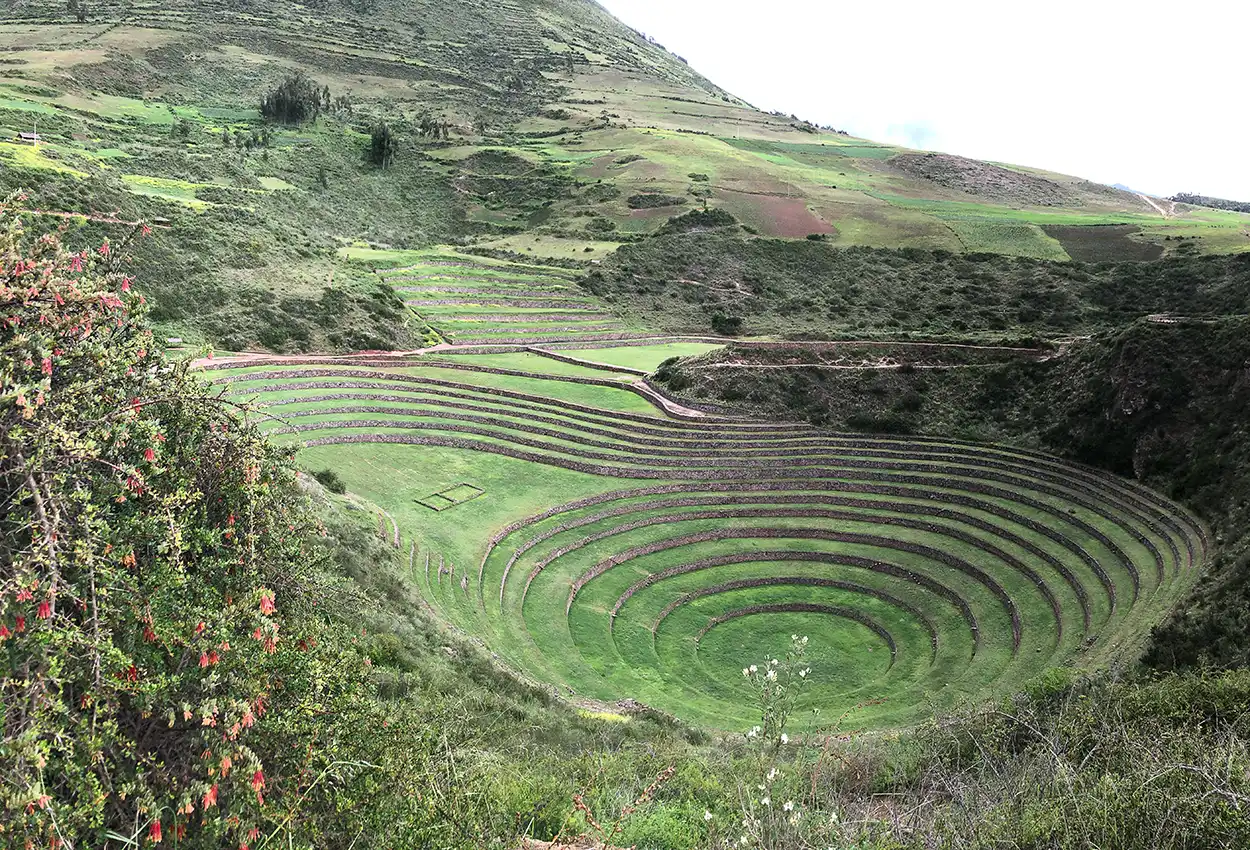
The archaeological site of Moray is unique in the region; here, you will find Inca terraces arranged in concentric circles that descend into the ground. Each level reaches a height of up to 1.20 meters (4 feet), and the terraces are distributed across two natural depressions. The view is stunning, whether observed from above or from below. It is believed that this site may have functioned as a kind of agricultural laboratory, where experiments were conducted by taking advantage of the distinct microclimates present at each level of the terraces. It is truly impressive impossible to overlook. Today, thanks to this site, Peru boasts more than 3,000 varieties of potatoes, over 20 varieties of quinoa, more than 100 types of corn, and many other agricultural products.